
Where Are Jofra’s Test Wickets?

Marnus Labuschagne is down. Hit on the helmet by a 147 kph bouncer, he’s now lying face-down on the pitch. Earlier in the day, he became the first ever concussion substitute in international cricket history and now he’s being concussion-checked after facing his first legal delivery. He’s only out here because, in Australia’s first innings, the same debutant bowler hit the back of the head of this generation’s greatest Test batter with a 149 kph bouncer. This was Jofra Archer’s launch into Test cricket at the Lord’s in an Ashes game. The match ended in a draw but Archer had got the cricketing world excited. Seven years down the line, his Test career feels like one that is unfulfilled.
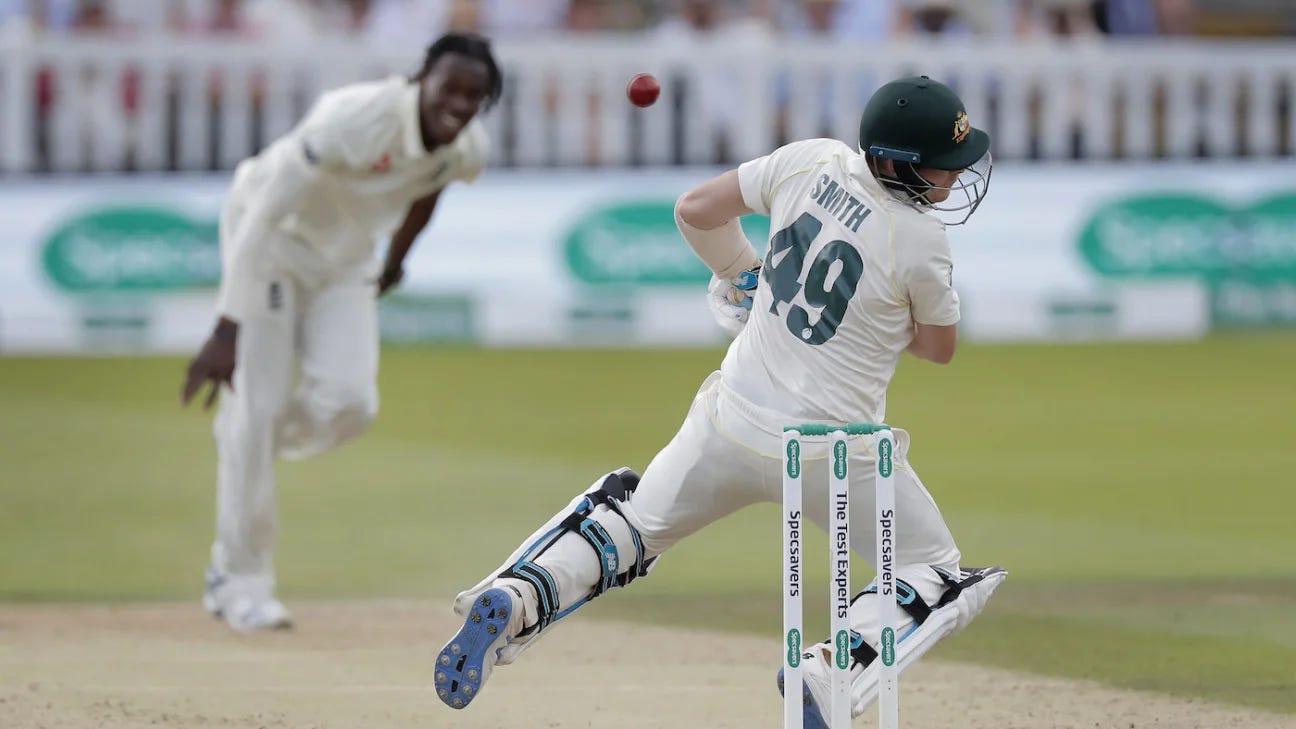
A career that has been marred by injuries yet every time Archer makes a comeback, the hype is real. Back in 2018, ECB brought in changes to their eligibility rules which enabled England to pick Archer for the 2019 World Cup. The hype around Archer would make you think he should be in the company of the Bumrahs, Cummins and Rabadas of the world but when you look at his numbers, he sits among all rounders and imperfect bowlers. Among the 38 seamers who have taken more than 50 wickets since his Test debut, Archer has the 11th-worst bowling average.
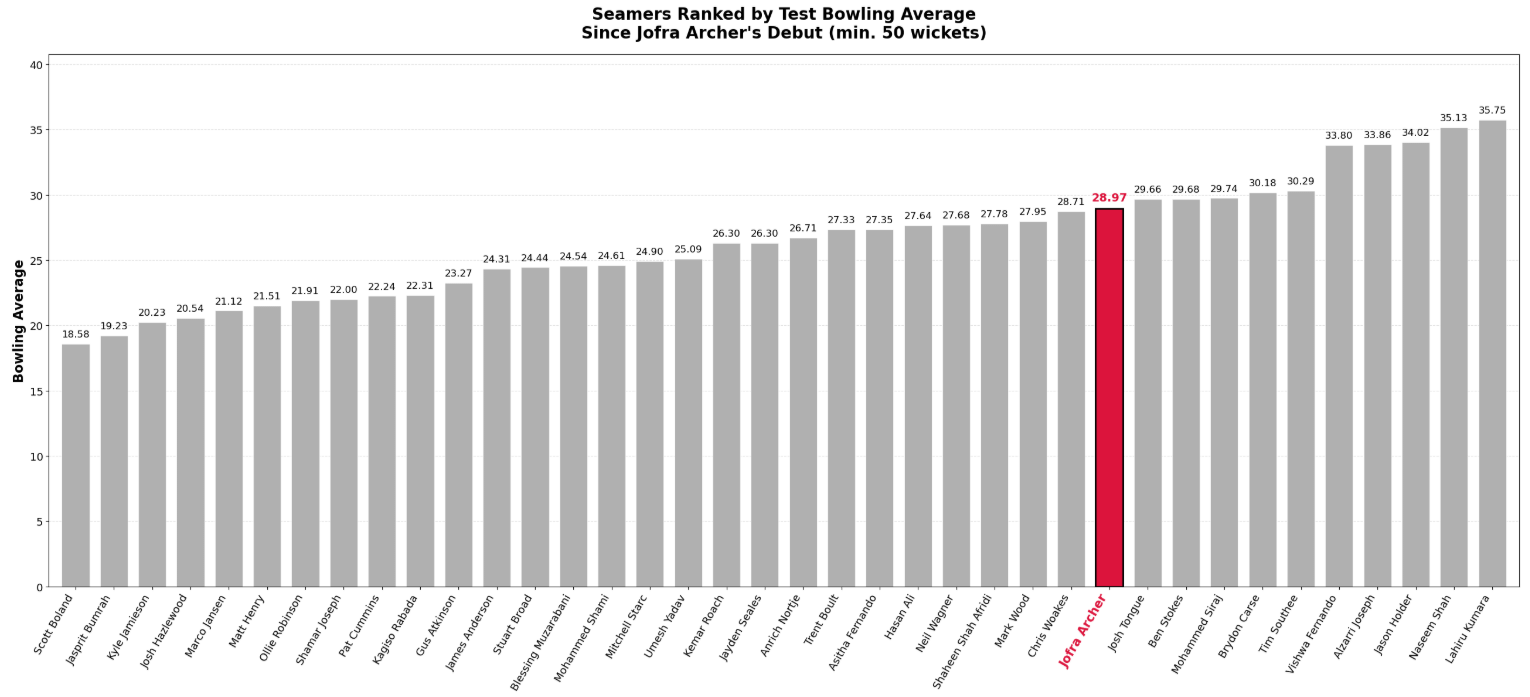
This is not to fault those who hype him. He obviously has the skills and anyone who has watched him bowl can attest that the hype around him is justified. He averaged 22.81 even in the recently concluded series vs New Zealand. But this is only the second time he has averaged below 25 in a Test series, the first being his famous debut series.
One striking revelation from his stats is that he has an excellent average against left-handed batters while seemingly struggling against right-handers. Not only does this deviate from the global trend – where right-arm seamers typically fare better against right-handers – but the difference is also significant.
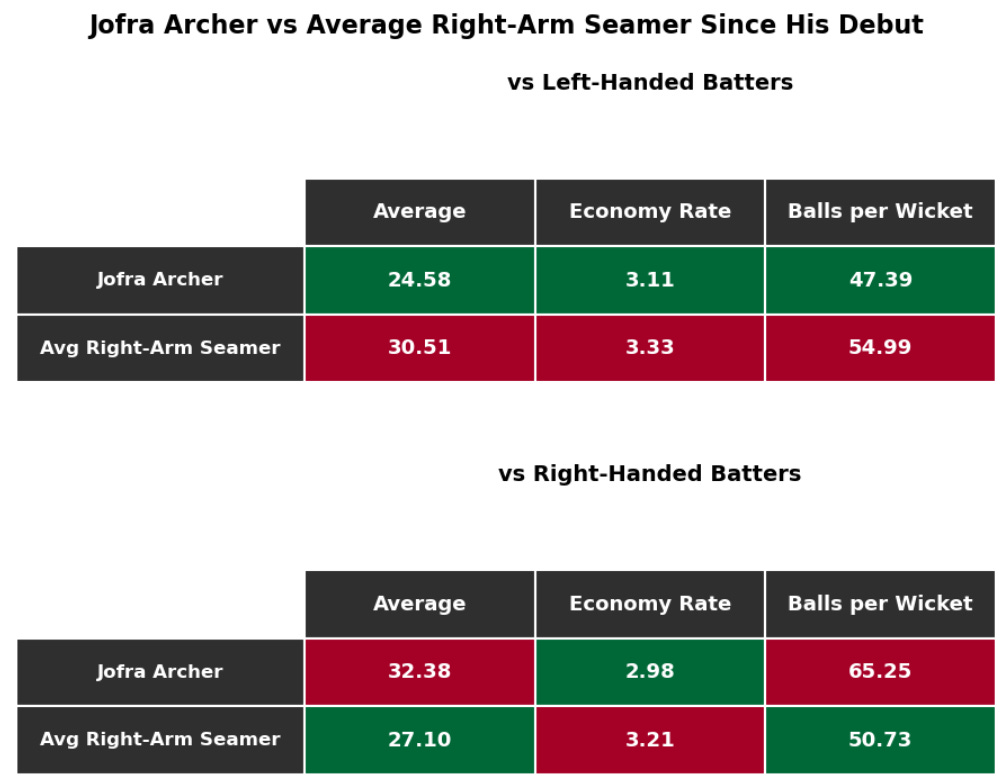
His economy is fine against right-handers but his lack of wicket-taking is what inflates his average. There’s a sense that Archer’s lengths are too short and that isn’t ideal for wicket-taking. Data does support that he bowls shorter more often than others.
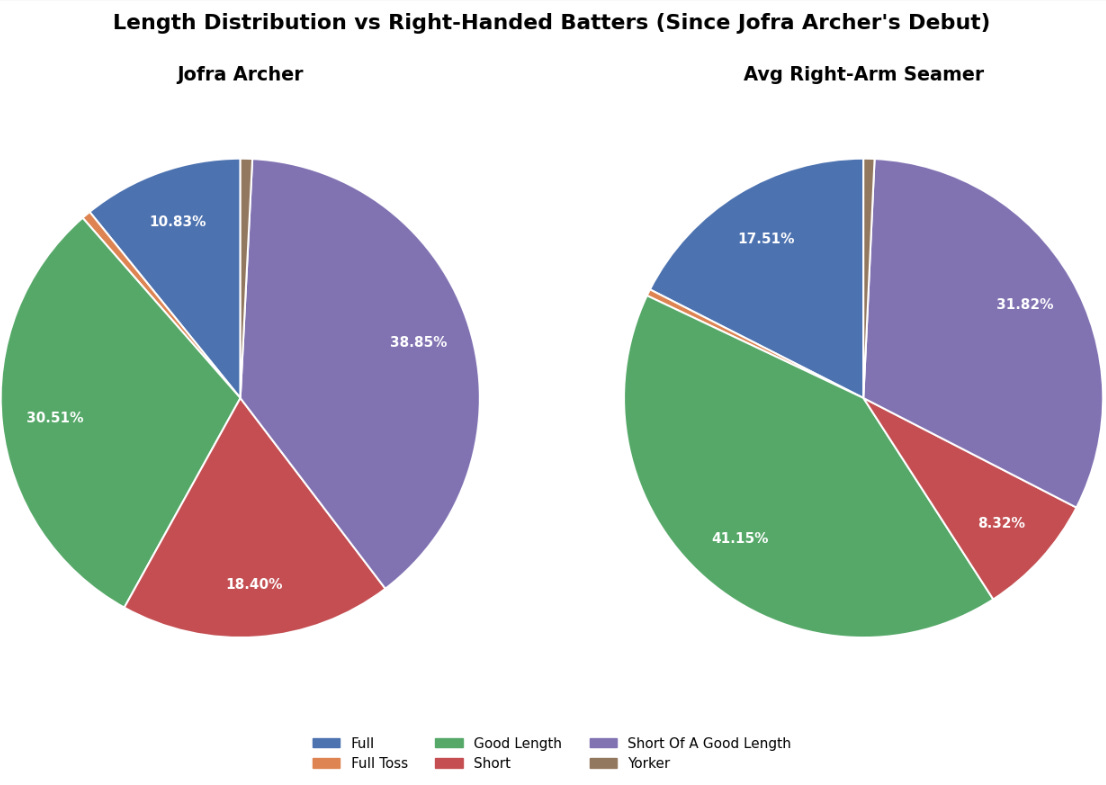
But you would be wrong if you think these shorter lengths are what is holding him back. His good length deliveries perform massively worse than those of an average right-arm seamer when bowling to right-handed batters.
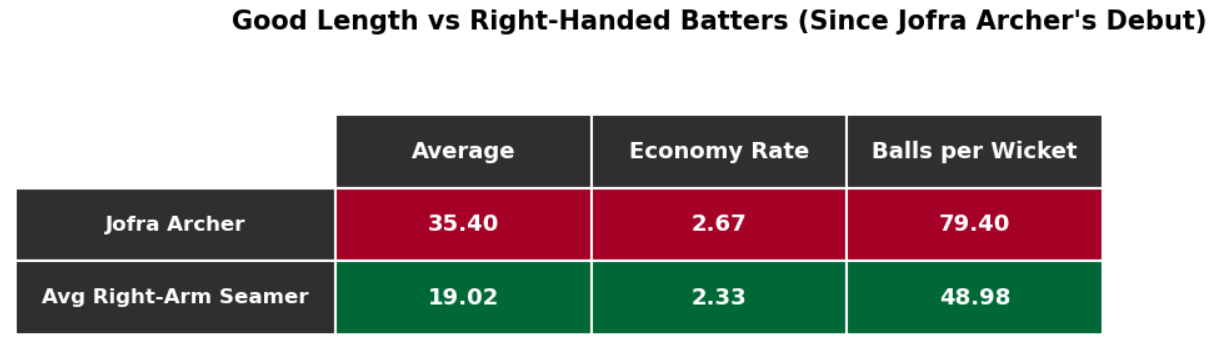
Breaking it down further makes it more interesting. The good-length outside-off delivery, which is the most effective line-length combination for a right-arm seamer vs right-handed batters with an average of 14.77, performs almost 2.5 times worse for Archer in terms of balls per wicket. But when he bowls his good length deliveries on a stump line, his balls per wicket is noticeably better than the global average.
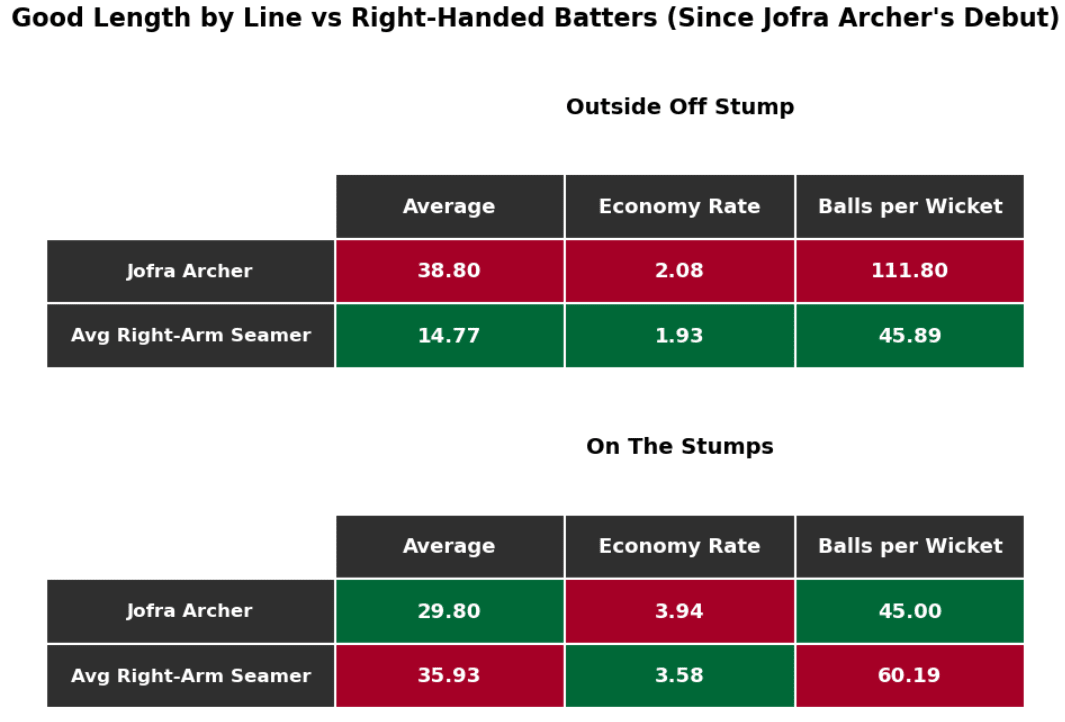
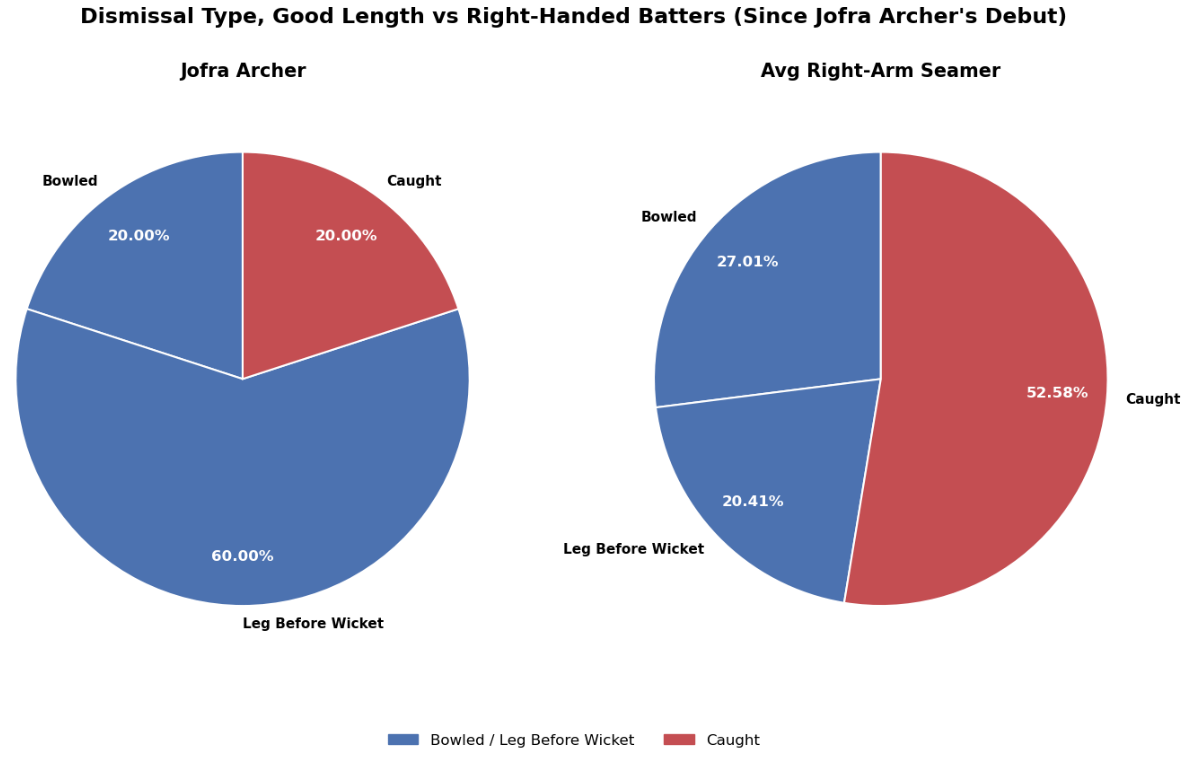
The lack of wickets from outside-off deliveries is likely because Archer is not primarily an outswing bowler and hence challenges the outside edge less than a typical right-arm seamer. Similarly the inward movement he gets could make his stump-line deliveries more threatening. This is reflected in the fact that an overwhelming majority of Archer’s wickets off a good length are bowled or LBW.
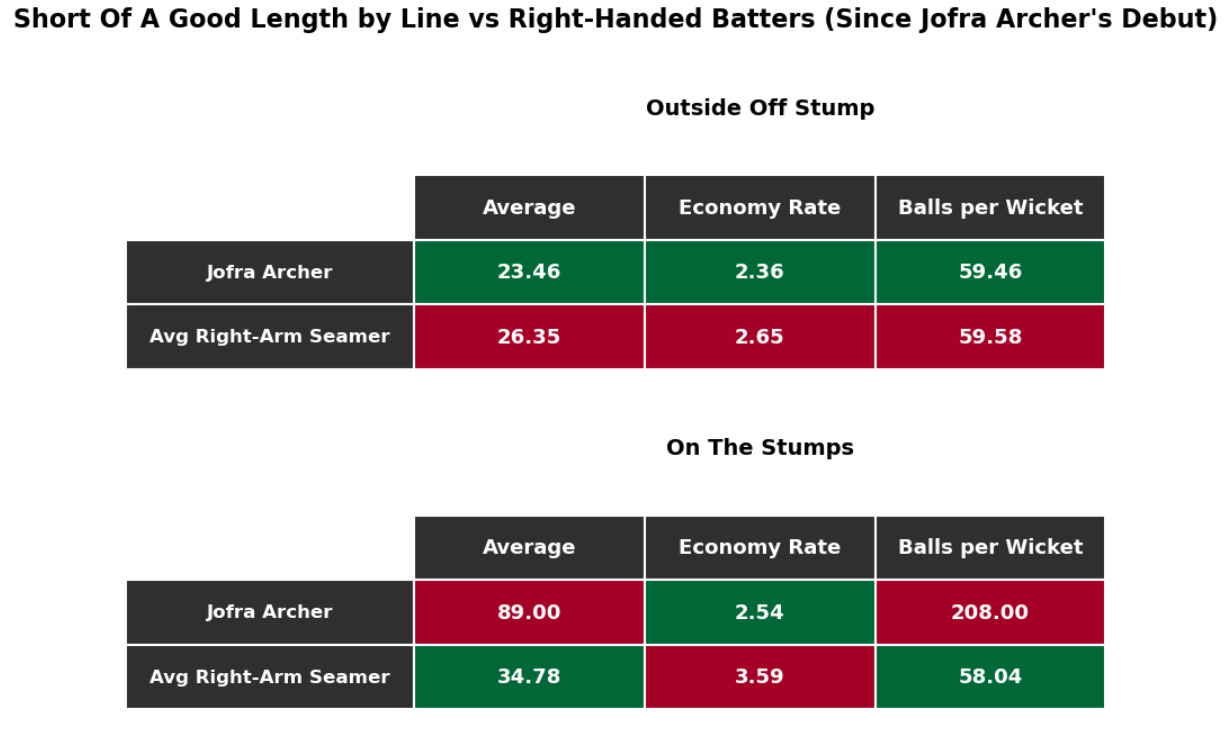
This stump-line advantage disappears when he bowls short of a length because stump-line deliveries from that length would either bounce above the stumps or move too much and miss the leg stump. This is borne out by the fact that Archer has picked only one wicket from 208 short of a length stump-line balls bowled to right-handers. Meanwhile, because the outswinger is less threatening from this length, his balls per wicket ratio from outside off deliveries is comparable to the average right-arm seamer.
But what about the short-pitched deliveries? Surely this has to be a strength for Archer, right?
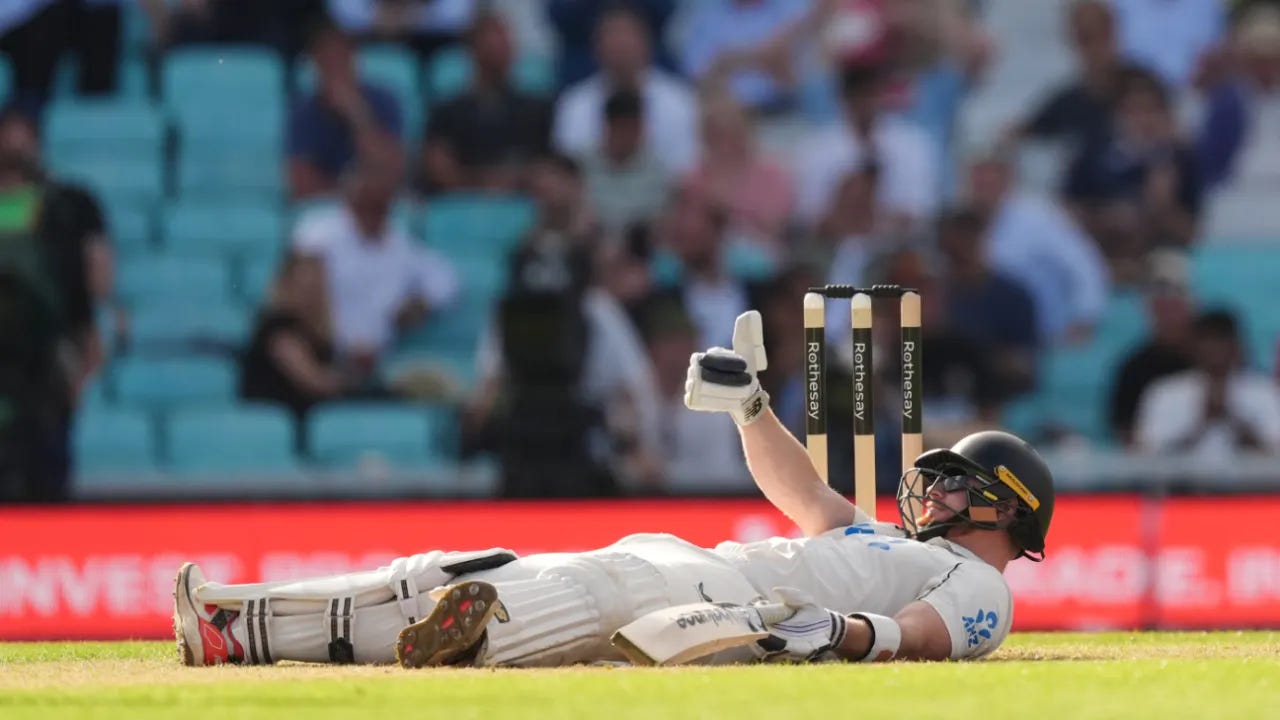
Glenn Phillips lay still on the Oval surface for a few seconds before tilting his sunglasses-shaded head forward and giving a thumbs up. He had fallen on his back trying to sway away from an Archer bouncer. It was an intense duel where Archer kept delivering bouncer after bouncer, flooring Phillips multiple times in the process. The article started with a description of how Archer floored Smith and Labuschagne with his bouncers, so it’s natural to assume that his short balls are his strength.
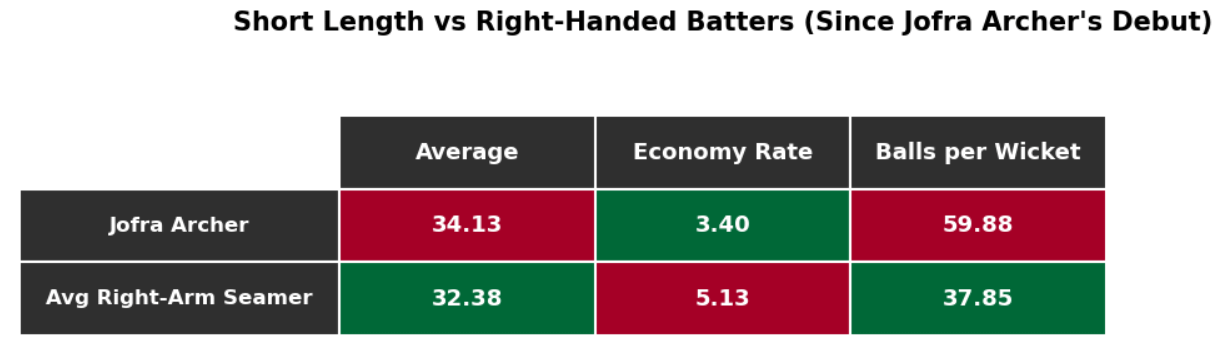
Data shows that Archer’s short-pitched deliveries have a worse average than those of an average right-arm seamer, but only marginally. Look closer and you’ll see that the heavy lifting is done by his economy while his wicket-taking threat lags significantly behind.
Archer hit and floored Phillips multiple times at the Oval but didn’t get him out in that innings. Archer hit Labuschagne on the helmet with the first legal ball he bowled to him but didn’t get him out in that innings. Archer hit Smith’s head so hard that he suffered a concussion but he has never dismissed Smith in Test cricket.
Somehow Archer’s bouncers are good enough to floor even the best batters, yet they can’t buy him wickets. It seems counterintuitive, given that he possesses one of the most lethal bouncers in the game. But before you doubt the data, let me tell you that data also has some evidence for this.
When right-handed batters play the pull shot to Archer’s short balls, he picks up a wicket every 10.17 balls - twice as frequently as a typical right-arm seamer (20.41). But here’s the catch: 30.90% of short-pitched deliveries from right-arm seamers are pulled by right-handers while against Archer, the pull shot is played to less than half that proportion (12.73%).
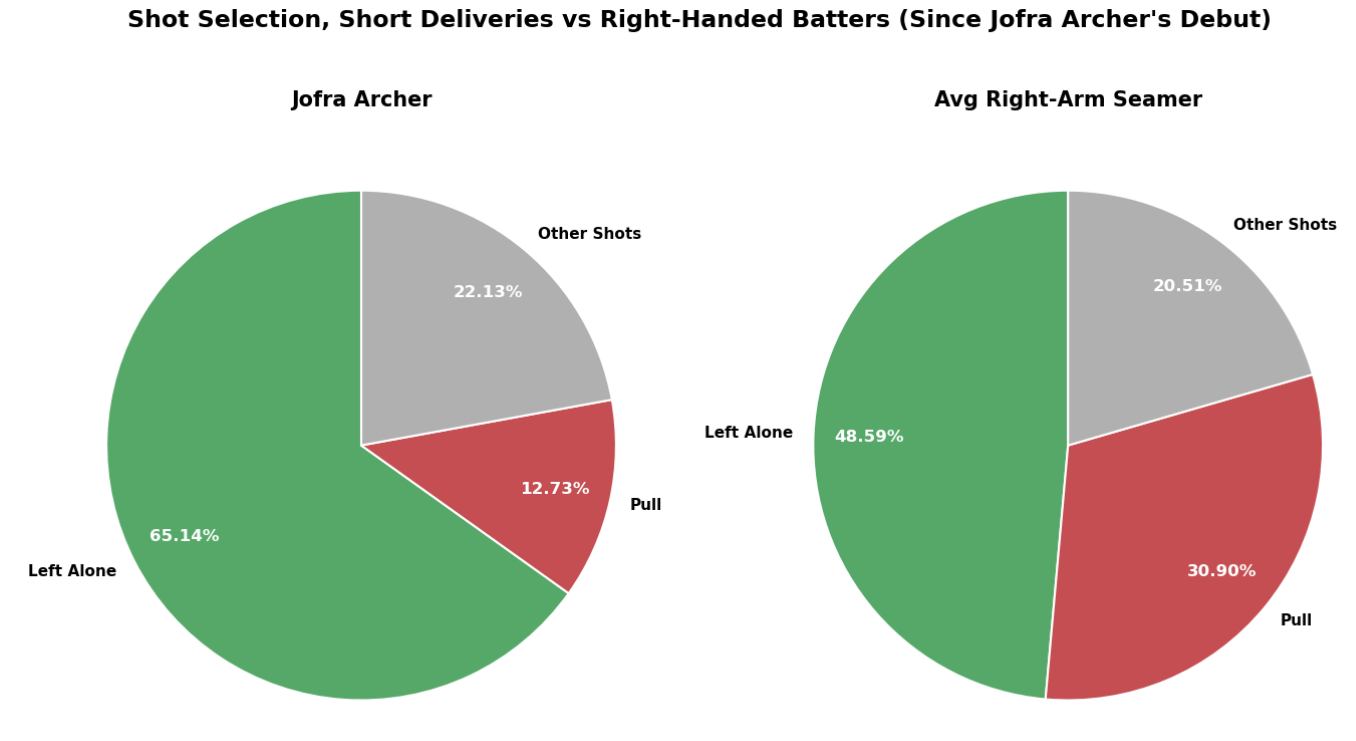
Also, the proportion of leaves off Archer’s short balls is well above that of an average right-arm seamer. The steep bounce he generates, while threatening, may actually be counterproductive. It could be making it easier for batters to decide to duck or sway rather than forcing indecision.
This pattern is consistent against left-handers too.
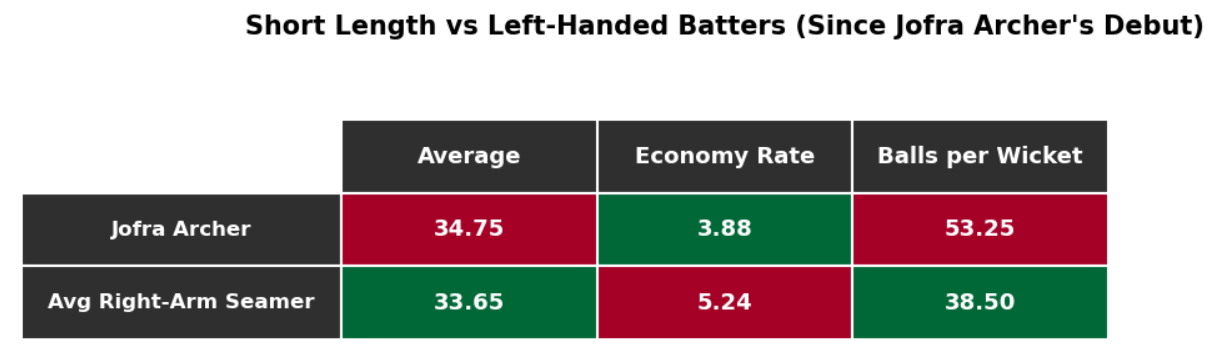
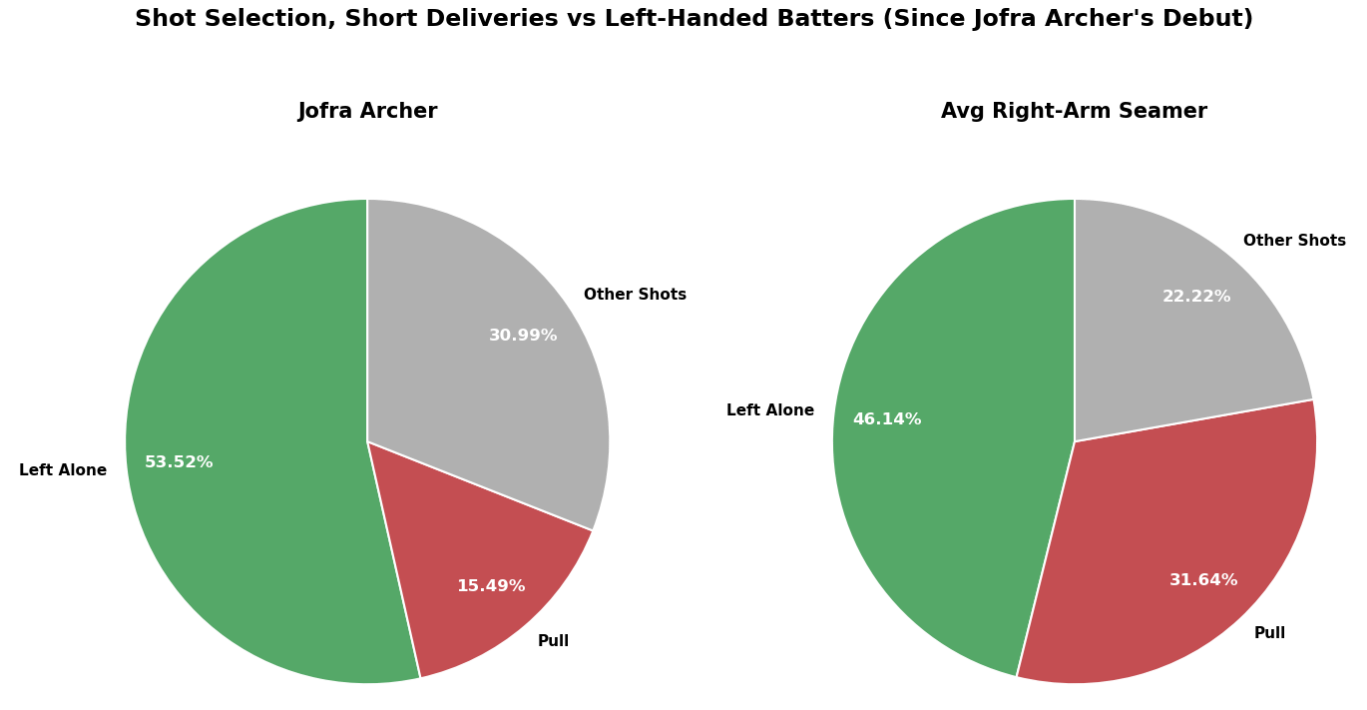
But what’s different against left-handers is that short length is the only length that doesn’t work.
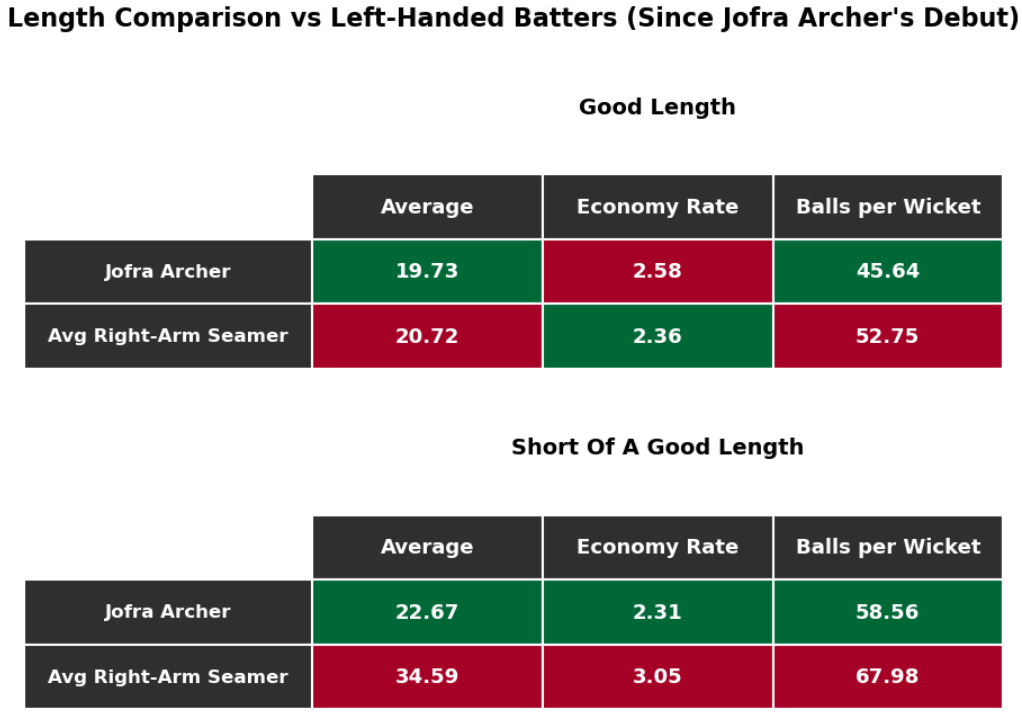
As with right-handers, the stump line is Archer’s most productive line against left-handers as well. The dynamic here is that when he bowls from round the wicket, which accounts for 80.57% of his deliveries to left-handers, he keeps all modes of dismissal in play by angling the ball in and using his ability to move it away.
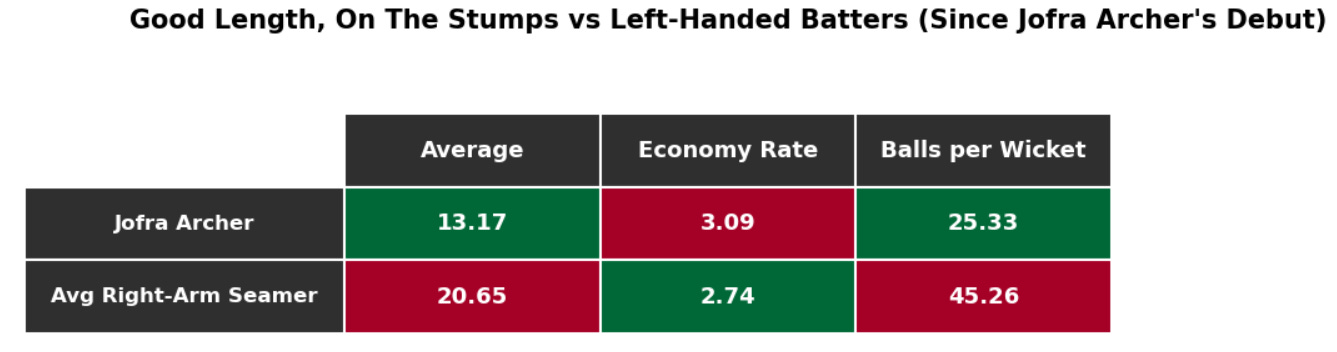
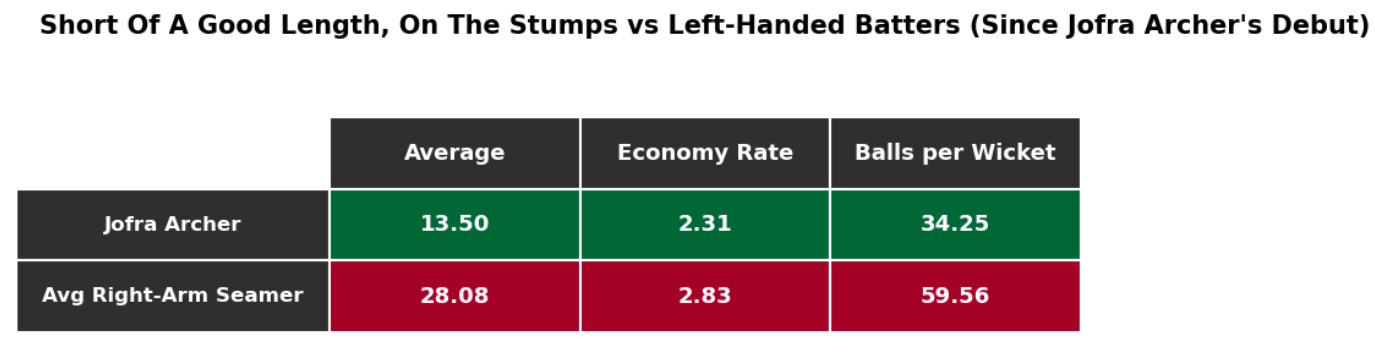
But the key difference here is that the outside off deliveries don’t undo the good work done by the stump line deliveries. Although they are still worse than those of an average right-arm seamer, the difference isn’t as pronounced as it was against right-handers. The away movement likely helps.
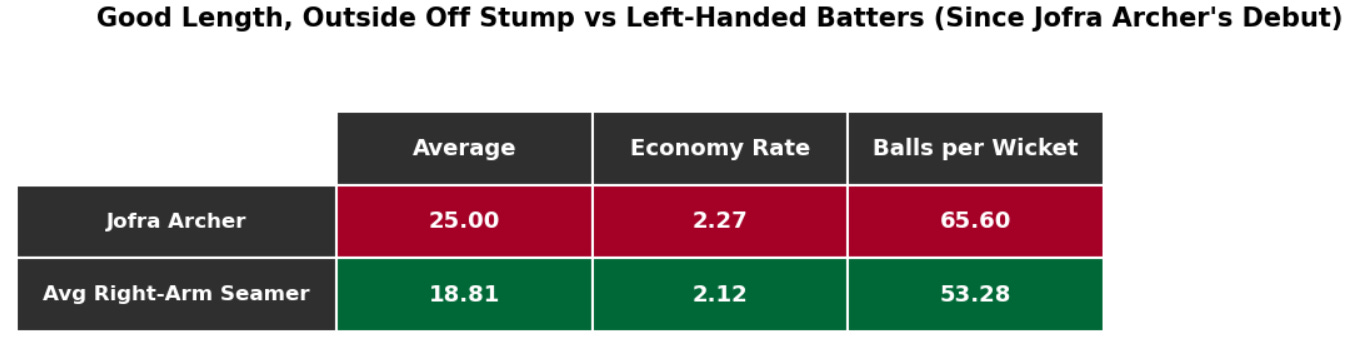
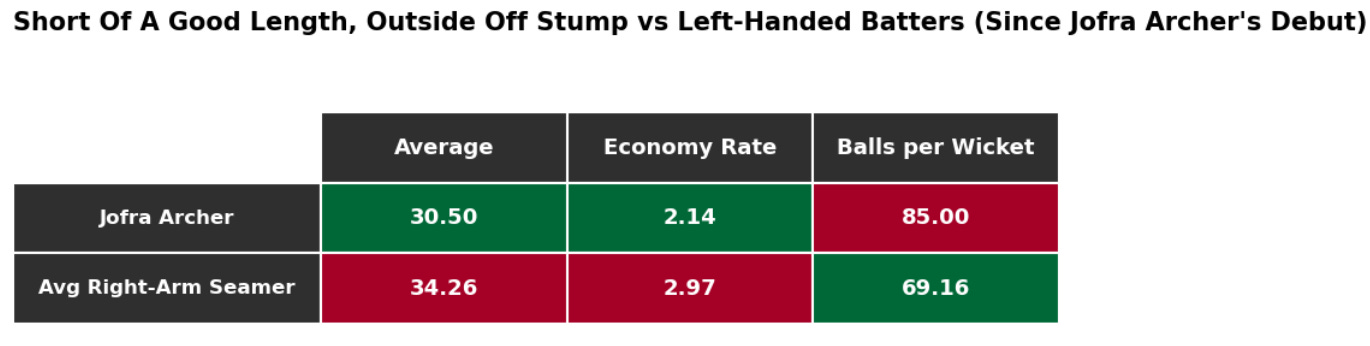
That said, Archer did average 21.8 vs right-handers in the recent series against New Zealand - almost two runs better than his average against left-handers (23.67). But it’s also important to note that the heavy lifting was done by short and full lengths, which is not sustainable. The staple good and short of a good length deliveries were still found wanting. He got only one wicket off 79 short of a good length deliveries and no wickets from good length.
Although Archer has an outstanding record against left-handers, he has to bowl the majority of his deliveries to right-handers. It’s fascinating how Archer’s ability to move the ball inwards and to extract steep bounce, which are supposed to be his USPs, is what hurts his Test credentials. Cricket does tend to behave in such mysterious ways. Regardless, Archer’s immense ability is undeniable and his Test numbers could still get better. But for now, where are Jofra’s Test wickets? Well, they’ve been consumed by his own strengths.
All stats presented in this article are accurate as of June 30, 2026.
Stats & Data credit: Adithya Balagoni (@TechRadar9 on Twitter) and Himanish Ganjoo, Statsguru, Cricmetric
This is a fascinating way of looking at Archer. We've spent years remembering the fear his bouncer creates, but fear and wickets aren't always the same thing. Sometimes his greatest weapon almost gives batters an easier decision, duck instead of play.
This is one of the biggest paradoxes in cricket. One of the most threatening bowlers in a batter's mind can also be the one who doesn't end up with the wickets.
Archer needs to add another weapon to his arsenal, a delivery that moves away from the batter. Whether it's a wobble-seam ball or something else, he needs that variation. Another aspect is that Jofra doesn't seem to be using the crease effectively enough. He could world towards using the angles to his advantage.